- E-mail: info@sunday-campers.com
- Tel.: +86 15801504548

For importers, outdoor brands, distributors, and private-label buyers, rooftop tent quality control should not end when production is completed.
The period before shipment is one of the most important stages of a bulk rooftop tent order. Once hundreds of tents have been loaded into a container and shipped internationally, even a relatively small manufacturing problem can become expensive to correct.
A scratched shell, missing mounting bracket, leaking seam, damaged zipper, incorrect logo, or poorly protected carton may seem minor at the factory. At the destination, however, the same problem can result in customer complaints, replacement costs, delayed sales, and damage to your brand reputation.
For this reason, professional buyers should establish a clear rooftop tent quality control checklist before approving a shipment.
Quality inspection begins with specifications, not visual inspection.
Before checking finished products, the inspector should have access to the approved sample, purchase order, specification sheet, drawings, packaging requirements, and branding instructions.
Important information may include:
● Model number
● Open and closed dimensions
● Net and gross weight
● Shell material
● Tent fabric specification
● Fabric color
● Mattress thickness
● Ladder specification
● Mounting hardware
● Accessories
● Logo position
● Packaging method
● Label requirements
● Quantity per shipment
This documentation establishes a reference against which finished products can be checked.
Without clearly approved specifications, disagreements can easily occur because the buyer and manufacturer may have different interpretations of what constitutes an acceptable product.
For OEM rooftop tent projects, this becomes even more important because customized products may differ from the manufacturer's standard models.
The first inspection should focus on overall appearance.
Every sampled rooftop tent should be checked from multiple angles under adequate lighting.
Inspectors should look for:
● Scratches or dents on hard shells
● Uneven surface finishes
● Paint or coating defects
● Fabric stains
● Incorrect colors
● Loose threads
● Poor stitching
● Wrinkled or distorted fabric
● Damaged webbing
● Deformed aluminum components
● Incorrectly positioned logos
● Missing decorative or protective parts
For hard shell rooftop tents, particular attention should be paid to the shell edges, corners, hinges, extrusion profiles, and surface finish.
For soft shell rooftop tents, inspect the tent body, travel cover, PVC components, sewing lines, straps, and folding platform.
Minor cosmetic defects should also be defined before production because buyers serving premium retail markets may have stricter appearance requirements than buyers supplying entry-level product lines.
Tent fabric is one of the components customers interact with most directly.
Check the fabric for consistent color, coating, texture, and workmanship.
The inspection should include:
● Correct fabric specification
● Correct color
● No visible holes or cuts
● No significant stains
● Consistent coating
● Properly finished edges
● Reinforcement at high-stress locations
● Correct mesh installation
● Proper attachment to the tent structure
Extra attention should be paid to areas around windows, doors, corners, poles, and connection points because these locations experience more movement during repeated opening and closing.
For private-label projects, buyers should make sure that production fabric matches the approved sample rather than relying only on a verbal material description.
Good sewing quality is essential for rooftop tent durability.
Inspectors should check whether seams are straight, consistent, and properly finished.
Common problems to look for include:
● Skipped stitches
● Broken threads
● Loose thread ends
● Uneven stitching
● Poor reinforcement
● Incorrect seam position
● Fabric bunching around seams
● Incomplete stitching around windows or zippers
High-stress areas require particular attention.
These commonly include ladder connection areas, corners, door openings, window panels, straps, and areas where fabric connects with the tent frame.
The objective is not simply to make the product look neat. Stitching must remain reliable after repeated folding, opening, packing, and outdoor use.
Water leakage is one of the most damaging complaints an outdoor brand can receive.
Before shipment, inspectors should therefore check the parts of the rooftop tent most likely to allow water penetration.
These include:
● Roof seams
● Side-wall seams
● Window seams
● Door seams
● Stitching around attachment points
● Shell joints
● Rainfly connections
● Zipper areas
● Sealing tape or waterproof treatment
Where required by the buyer's quality plan, selected units can also undergo controlled water testing.
The purpose of this test is to identify obvious leakage problems before the entire order leaves the factory.
For OEM buyers, the test method and acceptance criteria should ideally be agreed before mass production begins.
A rooftop tent is a mechanical product as well as a textile product.
It should therefore be operated during inspection rather than checked only in the packed position.
For each selected unit:
● Open the rooftop tent completely.
● Confirm that the structure deploys correctly.
● Check that fabric tension is appropriate.
● Test the ladder.
● Open and close windows and doors.
● Test all zippers.
● Inspect hinges and moving parts.
● Close the rooftop tent again.
● Confirm that the product packs correctly without abnormal resistance.
Hard shell models require additional attention to opening mechanisms, gas struts, hinges, locks, and shell alignment.
The tent should open smoothly and remain stable in its intended operating position.
Repeated functional checks are particularly useful for identifying assembly inconsistencies that may not be visible during a simple appearance inspection.
The ladder is an important supporting component of many rooftop tent systems.
Before shipment, check:
● Ladder material
● Ladder dimensions
● Telescopic or folding operation
● Locking mechanisms
● Fasteners
● Attachment points
● Feet or end caps
● Surface finish
● Visible deformation
Extend and retract the ladder several times where applicable.
It should operate smoothly without obvious looseness, binding, or abnormal movement.
The connection between the ladder and tent base should also match the approved product design.
For B2B buyers, ladder specifications should remain consistent between sample approval and mass production because even a seemingly minor component change can affect installation and customer experience.
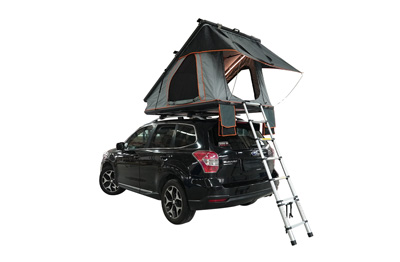
Hard shell rooftop tents contain several components that should be function-tested before shipment.
Depending on the design, these may include:
● Gas struts
● Hinges
● Locks
● Latches
● Handles
● Support arms
● Sliding components
● Opening mechanisms
Inspect the hardware for damage, corrosion, looseness, incorrect installation, or abnormal operation.
Open and close the tent multiple times.
Both sides should move consistently, and the shell should align correctly when closed.
Any abnormal noise, resistance, uneven opening, or failure to remain fully open should be investigated before shipment approval.
The interior is where end users will notice quality immediately.
Inspect:
● Mattress dimensions
● Mattress thickness
● Foam condition
● Mattress cover
● Interior fabric
● Condensation mat, if included
● Storage pockets
● Interior lighting, if included
● Internal straps or attachment points
The mattress should fit the sleeping platform correctly without excessive gaps or distortion.
For OEM projects, buyers should also confirm that the production mattress matches the density, thickness, and covering material agreed during sample approval.
Missing or incorrect installation parts can make an otherwise perfect rooftop tent impossible for the customer to use.
Every packaging configuration should therefore be checked against an approved accessory list.
Depending on the model, mounting components may include:
● Mounting plates
● Bolts
● Nuts
● Washers
● Brackets
● Rails
● End caps
● Tools
● Installation accessories
Check both quantity and specification.
It is useful to create a standardized accessory checklist for each rooftop tent model so that packing workers and final inspectors can verify every set before the carton is closed.
For distributors selling products through retail channels, this small control step can significantly reduce avoidable after-sales problems.
Different rooftop tent orders may include different accessories.
These can include:
● Shoe bags
● LED lights
● Annex rooms
● Awning poles
● Storage bags
● Anti-condensation mats
● Rainflies
● Window rods
● Spare hardware
● Additional brackets
OEM buyers should avoid using one generic packing list for every model.
Instead, each SKU should have its own Bill of Materials or accessory checklist.
This is especially important when one container includes several rooftop tent models or multiple customized versions.
For private-label customers, branding errors can make products commercially unusable even when the tents themselves function perfectly.
Before shipment, inspect:
● Brand logo
● Logo size
● Logo color
● Logo position
● Sewn labels
● Product labels
● Carton marks
● Instruction manuals
● Barcodes
● Model numbers
● Country or importer information where required by the buyer
Compare everything against the approved artwork.
A logo positioned incorrectly on 300 tents cannot easily be corrected after arrival.
This is why branding approval should form part of the QC process rather than being treated merely as a packaging detail.
Randomly selected products should be measured to confirm key dimensions.
Depending on the model, buyers may check:
● Closed length
● Closed width
● Closed height
● Open sleeping dimensions
● Mounting rail position
● Crossbar installation range
● Ladder dimensions
● Net weight
Dimensional consistency is particularly important when the buyer publishes technical specifications online.
Large discrepancies between advertised specifications and delivered products can lead to vehicle-compatibility issues or customer complaints.
For OEM models, dimensional checks also help verify that the factory has followed the approved product drawings.
Whenever practical, at least one sampled unit should undergo a complete installation simulation before the shipment is approved.
The inspection should verify:
● Mounting rails fit correctly
● Brackets can be installed as intended
● Bolts and nuts match
● Required tools are available
● Instructions correspond to the supplied hardware
● Tent can be securely mounted to the intended support system
This is particularly valuable for a newly developed OEM model or the first mass-production order.
A product may pass visual inspection but still contain a mounting problem that becomes apparent only during installation.
Quality control should continue after the tent itself passes inspection.
Rooftop tents are large products, and international transportation creates additional risks.
Inspect:
● Inner protective materials
● Corner protection
● Carton strength
● Product immobilization
● Hardware packaging
● Moisture protection where required
● Carton sealing
● Shipping marks
● Model labels
● Gross weight markings
For hard shell models, surface protection deserves particular attention because abrasion during transportation can create visible cosmetic damage.
Packaging should be designed not only for factory handling but also for warehouse movement, container transportation, unloading, and final delivery.
Quantity verification should occur before the container is sealed.
Compare:
Purchase Order Quantity → Finished Quantity → Packed Quantity → Loaded Quantity
For mixed containers, check each SKU independently.
A loading record can include:
● Model
● Color
● Quantity
● Carton number
● Container number
● Loading date
Photos taken during loading can also create a useful shipment record for both buyer and supplier.
Before approving your next wholesale rooftop tent shipment, confirm the following:
● Product matches approved sample
● Model and quantity are correct
● Shell appearance passes inspection
● Fabric is correct and defect-free
● Stitching is complete and consistent
● Seams and waterproof construction are checked
● Tent opens and closes normally
● Ladder functions correctly
● Hinges and hardware are secure
● Gas struts operate normally where applicable
● Mattress specification is correct
● Mounting hardware is complete
● Accessories are complete
● Branding matches approved artwork
● Product labels are correct
● Dimensions meet specification
● Packing configuration is correct
● Cartons provide sufficient protection
● Shipping marks are correct
● Loading quantity is verified
● Inspection records are completed
This checklist can also be customized according to the rooftop tent type, target market, order quantity, and buyer's internal quality requirements.
Standard wholesale products already have established specifications.
OEM orders introduce additional variables.
A customized rooftop tent may involve different:
● Fabric
● Shell colors
● Dimensions
● Logos
● Mattress specifications
● Accessories
● Mounting components
● Packaging
● Instruction manuals
Every additional customized element creates another point that needs to be verified.
For this reason, OEM buyers should treat quality control as a process that begins with specification approval and continues through sampling, production, final inspection, and container loading.
The best way to reduce final inspection problems is to prevent specification ambiguity before production starts.
For overseas brands, importers, and distributors, selecting a supplier that understands both rooftop tent production and private-label requirements can simplify the sourcing process.
Sunday Campers focuses on rooftop tents and related vehicle camping products, with product categories including soft shell rooftop tents, hard shell rooftop tents, and car awnings. Public company information also identifies OEM and ODM capability for branded and customized rooftop tent projects.
Sunday Campers' current manufacturer information highlights custom OEM/ODM solutions and quality-control support for rooftop tent production.
For B2B buyers, this makes it possible to discuss more than simply a finished model and unit price. A sourcing project can also consider:
● Product specifications
● Target retail market
● Materials and construction
● Branding requirements
● Packaging
● Accessories
● Order quantity
● Production requirements
● Pre-shipment inspection expectations
If you are building a private-label rooftop tent range or sourcing wholesale rooftop tents for distribution, establishing these requirements before mass production can make final inspection substantially more efficient.
A good rooftop tent quality control checklist protects both the buyer and the manufacturer.
Pre-shipment inspection should cover more than appearance. It should verify construction, fabric, stitching, waterproof details, moving mechanisms, ladder function, mounting parts, accessories, branding, dimensions, packaging, and shipment quantities.
For importers and outdoor brands, the goal is simple:
Find problems at the factory—not after the container arrives at your warehouse.
Clear specifications, an approved sample, documented inspection criteria, and systematic pre-shipment checks can greatly reduce avoidable quality disputes.
If you are looking for a rooftop tent manufacturer for standard wholesale products or an OEM/ODM project, Sunday Campers can support product selection and customized rooftop tent development for overseas brands and distributors.


Copyright © sunday-campers.com All Rights Reserved | Powered by