- E-mail: info@sunday-campers.com
- Tel.: +86 15801504548

Choosing a rooftop tent supplier involves much more than comparing product photos and quotations.
For importers, outdoor brands, distributors, and private-label buyers, a supplier must be able to consistently manufacture the required rooftop tent specification, control product quality, manage materials, meet delivery schedules, and support future orders.
A structured rooftop tent supplier audit can help buyers identify these capabilities before moving from samples to mass production.
This checklist covers the main areas international buyers should review when evaluating a rooftop tent manufacturer.
Start by confirming who will actually manufacture your rooftop tents.
Check:
● Registered company name
● Business license
● Factory address
● Years of operation
● Export experience
● Main export markets
● Whether the supplier is a manufacturer or trading company
● Whether production is completed in-house or subcontracted
The company name on quotations, contracts, invoices, and export documents should also be consistent.
For OEM buyers, it is especially important to understand whether the supplier controls the actual manufacturing process.
A general outdoor-products factory is not necessarily an experienced rooftop tent manufacturer.
Ask what types of rooftop tents the supplier currently produces.
For example:
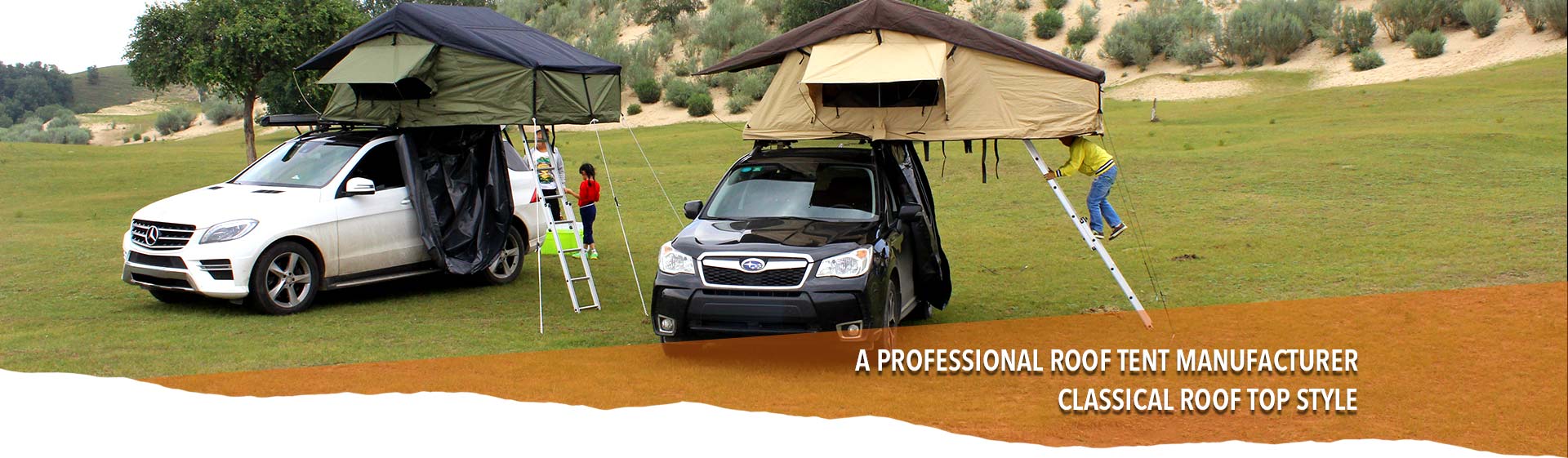
● Soft-shell rooftop tents
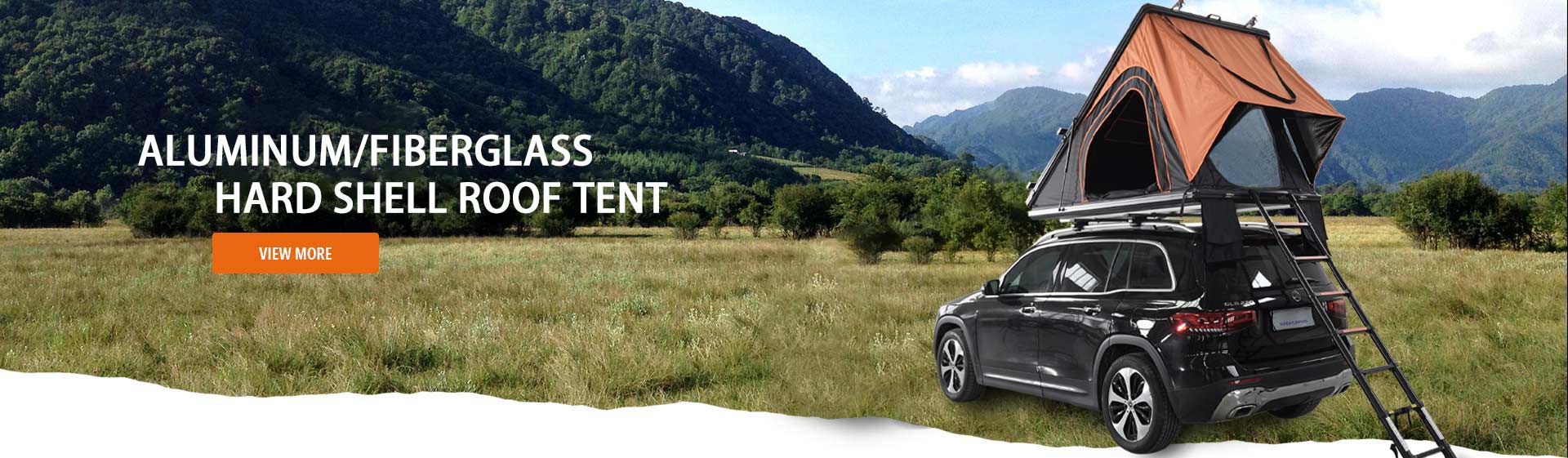
● Hard-shell rooftop tents
● Aluminum hard-shell tents
● ABS shell rooftop tents
● Clamshell rooftop tents
● Side-opening rooftop tents
● Compact rooftop tents
● Family-size rooftop tents
You can also ask to see products currently in production rather than relying only on showroom samples.
An experienced factory should understand common issues involving tent structure, fabric tension, hinges, gas struts, ladders, mattresses, mounting hardware, waterproofing, and packaging.
During a factory audit, follow the rooftop tent through the actual production process.
Depending on the model, this may include:
● Fabric cutting
● Sewing
● Seam treatment
● Frame preparation
● Aluminum or shell processing
● Surface finishing
● Hardware installation
● Gas-strut installation
● Tent-body assembly
● Mattress installation
● Ladder assembly
● Final setup
● Inspection
● Folding and packing
The objective is to understand which operations the factory controls directly.
If major processes are outsourced, ask how subcontractors are selected and how quality is controlled.
A supplier may be able to make a good sample but still struggle with a large production order.
Ask about:
● Number of production lines
● Number of sewing stations
● Assembly capacity
● Monthly rooftop tent output
● Peak-season capacity
● Current production workload
● Standard lead time
● Lead time for repeat orders
● Capacity available for your projected volume
Do not evaluate capacity only from a number provided by the sales team.
Compare the claimed output with the actual factory size, workforce, equipment, and production activity.
This becomes especially important for distributors and brands planning seasonal inventory.
Rooftop tents contain many different materials and components, and inconsistency in any one of them can affect the final product.
Key materials may include:
● Polyester or polycotton fabric
● Oxford fabric
● Waterproof coatings
● Aluminum profiles
● ABS or composite shells
● Gas struts
● Hinges
● Stainless-steel hardware
● Zippers
● Buckles
● Ladders
● Foam mattresses
● Mesh windows
● Mounting brackets
● Fasteners
Ask how incoming materials are inspected and identified.
For critical components, buyers may also request supplier information, material specifications, or test reports when necessary.
Fabric construction has a direct influence on rooftop tent durability and weather protection.
During the audit, inspect:
● Fabric specification
● Fabric weight
● Coating consistency
● Stitching density
● Seam alignment
● Reinforcement areas
● Zipper installation
● Window construction
● Mesh attachment
● Corner reinforcement
● Seam-sealing method
Pay particular attention to high-stress areas such as ladder connections, corners, doors, windows, hinges, and attachment points.
A visually attractive tent can still develop problems if these areas are poorly constructed.
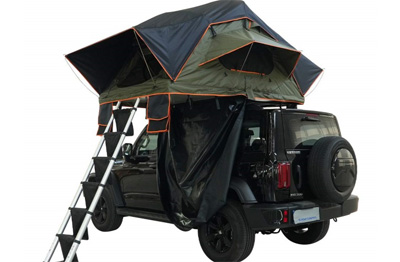
Waterproof specifications should be clearly defined rather than described only as "waterproof."
Ask the supplier:
● What waterproof rating is specified for the fabric?
● Is the rainfly specification different from the tent body?
● What coating is used?
● How are seams protected?
● Are waterproof tests conducted?
● Are finished tents checked for leakage?
● How are waterproof complaints handled?
For OEM projects, waterproof requirements should ideally be confirmed during sample approval.
This prevents the buyer and manufacturer from using different interpretations during mass production.
Structural components are another major audit area.
For hard-shell rooftop tents, inspect:
● Shell rigidity
● Aluminum panel quality
● Hinges
● Gas struts
● Locks and latches
● Opening mechanism
● Frame connections
● Seal strips
● Fasteners
For soft-shell tents, inspect:
● Base structure
● Supporting poles
● Hinges
● Folding mechanism
● Ladder connections
● Cover attachment
Open and close finished tents several times during the audit.
The mechanism should operate consistently without abnormal resistance, misalignment, loose hardware, or interference.
The ladder and vehicle mounting system are essential parts of a rooftop tent package.
Check:
● Ladder material
● Ladder locking mechanism
● Step construction
● Height adjustment
● Mounting rails
● Brackets
● Bolts
● Nuts
● Washers
● Installation accessories
Also confirm exactly which mounting components are included in the standard package.
This helps prevent disputes when containers arrive and customers discover that expected accessories were not included.
Ask how the manufacturer controls quality throughout production.
A practical quality system should normally include several inspection stages.
Components and raw materials are checked before entering production.
Problems are identified during sewing, assembly, or component installation instead of waiting until the product is finished.
The completed rooftop tent is checked before packing.
Possible inspection items include:
● Product dimensions
● Appearance
● Stitching
● Opening and closing
● Gas-strut function
● Ladder operation
● Hardware
● Mattress
● Accessories
● Labels
● Logo position
● Packaging
Buyers should also ask whether inspection records can be traced to specific production orders.
Testing requirements vary according to the rooftop tent model and target market.
Depending on the project, buyers may discuss tests related to:
● Waterproof performance
● Fabric tear strength
● UV resistance
● Color fastness
● Structural load
● Ladder load
● Gas-strut durability
● Zipper durability
● Corrosion resistance
● Packaging strength
● Material compliance
Do not assume that every test is required for every project.
Instead, identify the tests that matter for your product design, market, price positioning, and customer requirements.
For private-label rooftop tent projects, supplier evaluation should also include product-development capability.
Ask whether the manufacturer can support:
● Custom rooftop tent dimensions
● Fabric changes
● Custom colors
● Shell changes
● Custom aluminum structures
● Mattress specifications
● Logo printing
● Embroidery
● Product labels
● Instruction manuals
● Private-label packaging
● Accessories
● New product development
Buyers developing their own rooftop tent range should also confirm how samples, drawings, specifications, and revisions are managed.
A supplier with strong OEM/ODM capability should be able to turn buyer requirements into clear production specifications.
One common sourcing risk is receiving a good sample but a different product during mass production.
Before placing an order, confirm how the approved sample is controlled.
Ask whether the factory keeps:
● Approved sample
● Product specification sheet
● Material specification
● Color reference
● Logo artwork
● Packaging specification
● Accessory list
● Assembly instructions
The approved sample and specification should become the reference for mass production.
Any material substitution should be discussed before production rather than decided independently by the supplier.
Rooftop tents are relatively large products, so packaging has a significant effect on shipping damage and container utilization.
Inspect:
● Carton strength
● Foam protection
● Corner protection
● Plastic wrapping
● Hardware protection
● Accessory placement
● Product labels
● Carton marks
● Pallet requirements
● Packaging dimensions
For hard-shell rooftop tents, shell corners and edges deserve particular attention.
International buyers should also confirm:
● Units per container
● Package dimensions
● Gross weight
● Net weight
● Loading method
These figures affect freight cost and landed cost.
A rooftop tent manufacturer serving international customers should understand normal export procedures.
Ask about experience with:
● Commercial invoices
● Packing lists
● Bills of lading
● Certificates of origin
● Product documentation
● Shipping marks
● Export packaging
● Customer-specific documentation
If you sell into a market with specific product or material requirements, discuss these requirements before confirming the order.
Do not assume that experience exporting to one country automatically means the supplier meets the requirements of every market.
Quality management does not end when the container leaves the factory.
Ask the supplier what happens when a buyer reports:
● Missing accessories
● Damaged parts
● Sewing defects
● Water leakage
● Broken gas struts
● Ladder problems
● Hardware problems
● Packaging damage
● Incorrect branding
A reliable rooftop tent supplier should have a clear process for investigating problems, identifying causes, and implementing corrective actions.
For long-term purchasing relationships, corrective-action capability can be more important than simply promising that there will never be a defect.
International buyers can use the following simplified checklist during supplier evaluation:
| Audit Area | What to Check |
|---|---|
| Company | Business license, factory identity, export experience |
| Manufacturing | Real rooftop tent production capability |
| Capacity | Production lines, monthly capacity, lead time |
| Materials | Fabric, aluminum, shell, hardware, gas struts |
| Sewing | Stitching, seams, reinforcement, zippers |
| Waterproofing | Fabric rating, seam treatment, leakage testing |
| Structure | Frame, shell, hinges, opening mechanism |
| Ladder | Material, locking system, installation |
| Mounting | Rails, brackets, bolts and accessories |
| Quality Control | Incoming, in-process and final inspection |
| Testing | Waterproof, load, durability and material tests |
| OEM/ODM | Size, color, logo, structure and packaging customization |
| Sample Control | Approved samples and production specifications |
| Packaging | Protection, carton strength and shipping dimensions |
| Export | Documents and overseas shipment experience |
| After-Sales | Complaint handling and corrective actions |
Buyers should investigate further if they find:
● The supplier cannot clearly identify the manufacturing location
● Production shown during the audit does not match rooftop tent manufacturing
● Capacity claims do not match available equipment or staff
● Critical materials frequently change without documentation
● No clear incoming or final inspection process exists
● The supplier cannot explain how approved samples are controlled
● Test reports cannot be matched to the actual product or material
● Major production processes are subcontracted without clear control
● Quality problems have no documented corrective process
● Product specifications remain vague before mass production
One individual issue does not always mean a supplier should be rejected, but unresolved risks should be addressed before increasing order volume.
International buyers should not treat these three activities as interchangeable.
Factory audit: evaluates whether the supplier has the capability and systems to manufacture the product consistently.
Sample approval: confirms what the buyer actually wants the factory to manufacture.
Product inspection: checks whether a particular production batch meets the approved requirements.
Using all three gives buyers much stronger sourcing control than relying on a showroom sample or supplier quotation alone.
Sunday Campers works with international rooftop tent brands, wholesalers, distributors, and outdoor-product businesses on bulk and OEM/ODM projects.
Buyers can discuss customized requirements including:
● Hard-shell and soft-shell rooftop tent designs
● Tent dimensions
● Fabrics and colors
● Shell and frame specifications
● Waterproof requirements
● Mattresses
● Ladders
● Accessories
● Branding and logos
● Product labels
● Private-label packaging
For an international buyer, choosing a rooftop tent supplier should be based on more than price.
A supplier that can clearly control materials, production, inspection, customization, packaging, and corrective actions is better positioned to support a stable long-term sourcing program.
Contact Sunday Campers to discuss your rooftop tent sourcing, OEM/ODM development, and wholesale requirements.


Copyright © sunday-campers.com All Rights Reserved | Powered by